

Aluminium Foil on Windows: Does It Actually Work?
Millions of people reach for aluminium foil as a quick fix for blocking light from windows. It is cheap, widely available, and appears to do the job at a glance. But does it actually work? And are there risks you should know about before you start taping foil to the glass?
In this article, we break down how well aluminium foil on windows performs, the problems that come with it, and the alternatives that deliver a proper, lasting blackout.
Does Aluminium Foil Block Light? (What You Need to Know)
Aluminium foil does reflect and absorb light, so it can reduce brightness in a room when taped over a window. In a pinch, it works. The problem is that "reduces brightness" is very different from "true blackout." Foil rarely seals the edges of a window frame, which means light bleeds in around the sides and along the bottom. The foil also tends to crinkle over time, creating uneven gaps where light gets through.
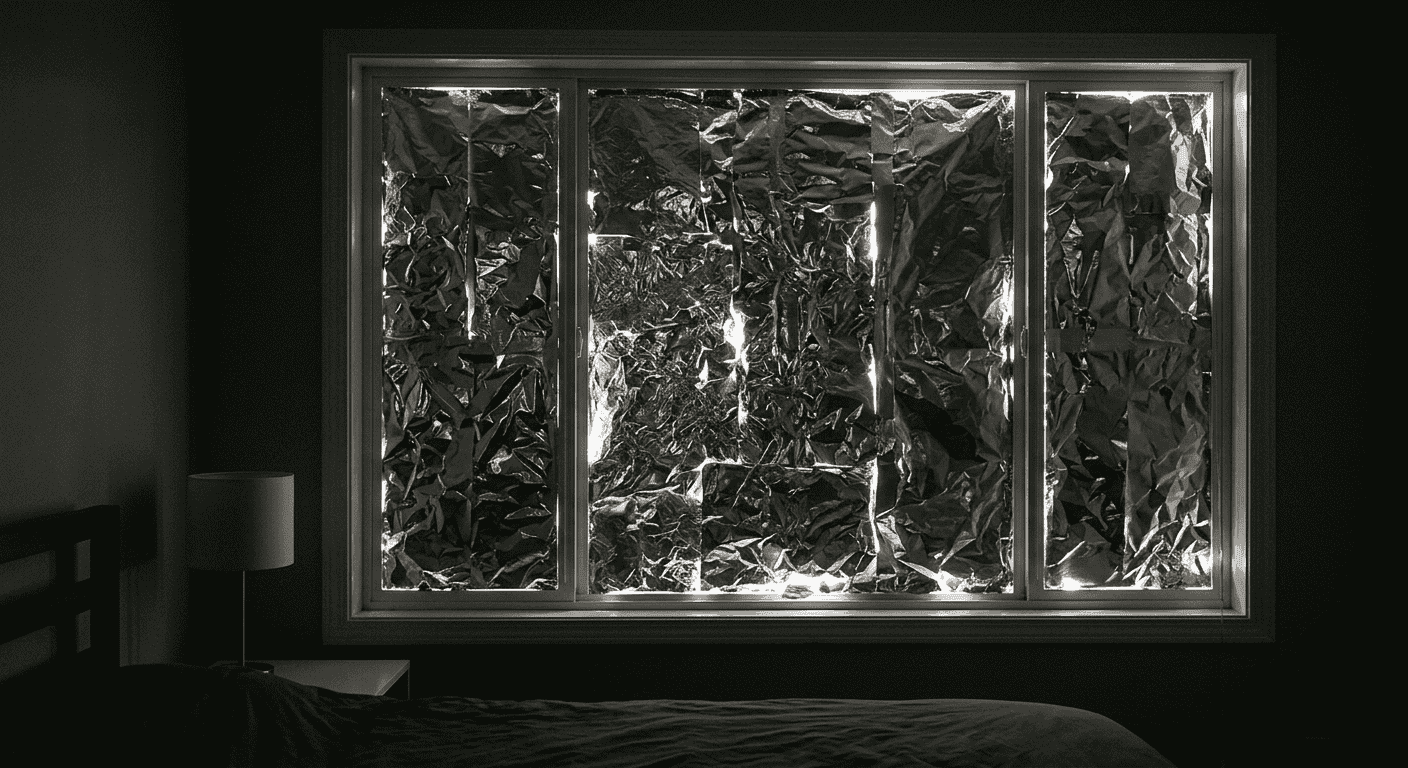
For anyone who needs genuine darkness, whether for a baby's nap, day sleeping after a night shift, or a home theatre setup, the gaps that foil leaves behind are enough to disrupt sleep or ruin the effect entirely. If you want a solution that actually blocks 100% of light, check out the My Blackout Portable Blind.
Why Aluminium Foil Falls Short as a Blackout Solution
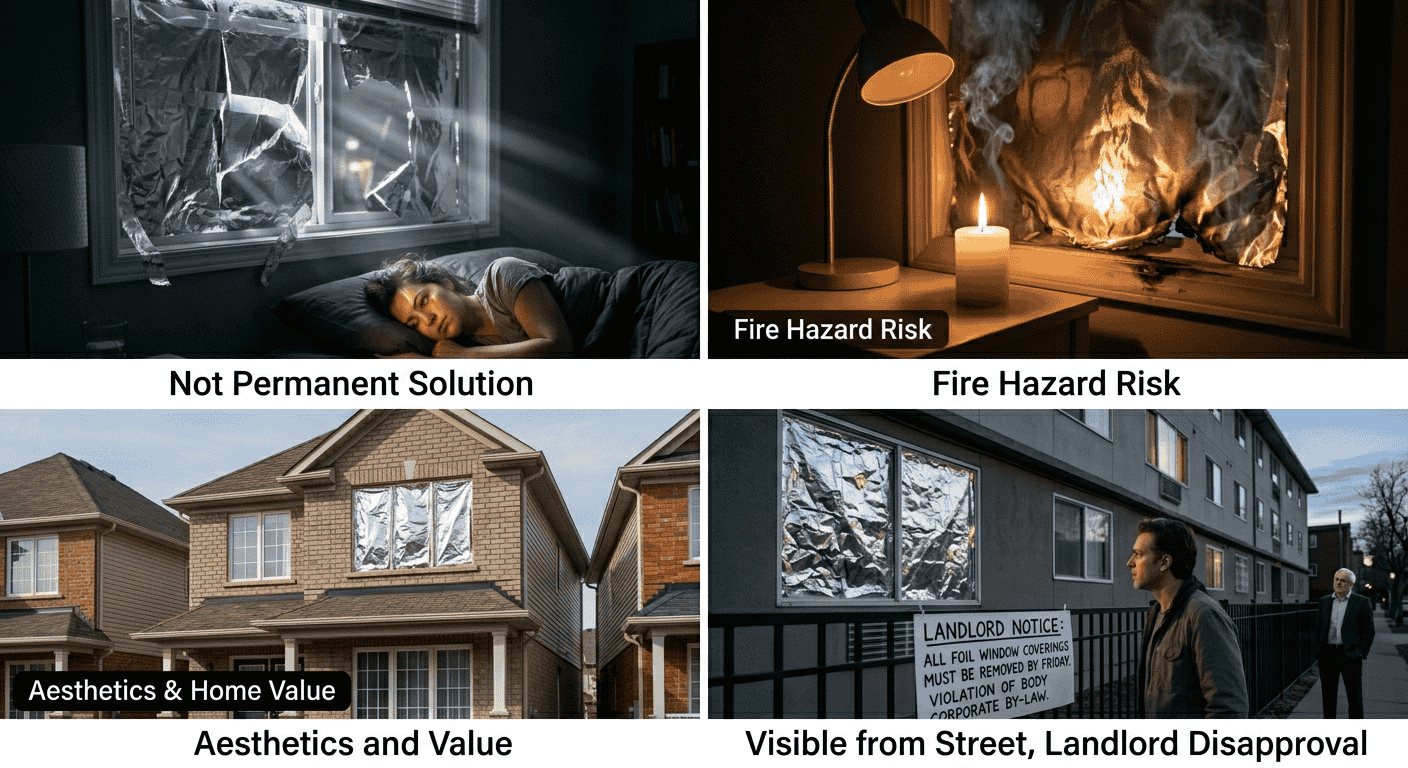
It Is Not a Permanent Solution
Aluminium foil is not designed to be a permanent solution for blackout windows. It can quickly become damaged, torn or deteriorate, and it may not even block out all of the light. Tape and foil also leave residue on glass and frames, which can be difficult to clean off.
Fire Hazard Risks
Aluminium foil can become a fire hazard when placed too close to a light source, such as a lamp or a candle. It can also reflect sunlight and concentrate heat onto nearby surfaces, which can potentially start a fire in dry conditions.
Aesthetics and Home Value
While it may seem like a simple solution, covering your windows with aluminium foil can look unattractive and cheap, and it may even decrease the value of your home. Most landlords and body corporates also take a dim view of foil-covered windows visible from the street.
Better Alternatives for Blackout Windows
Portable Blackout Blinds
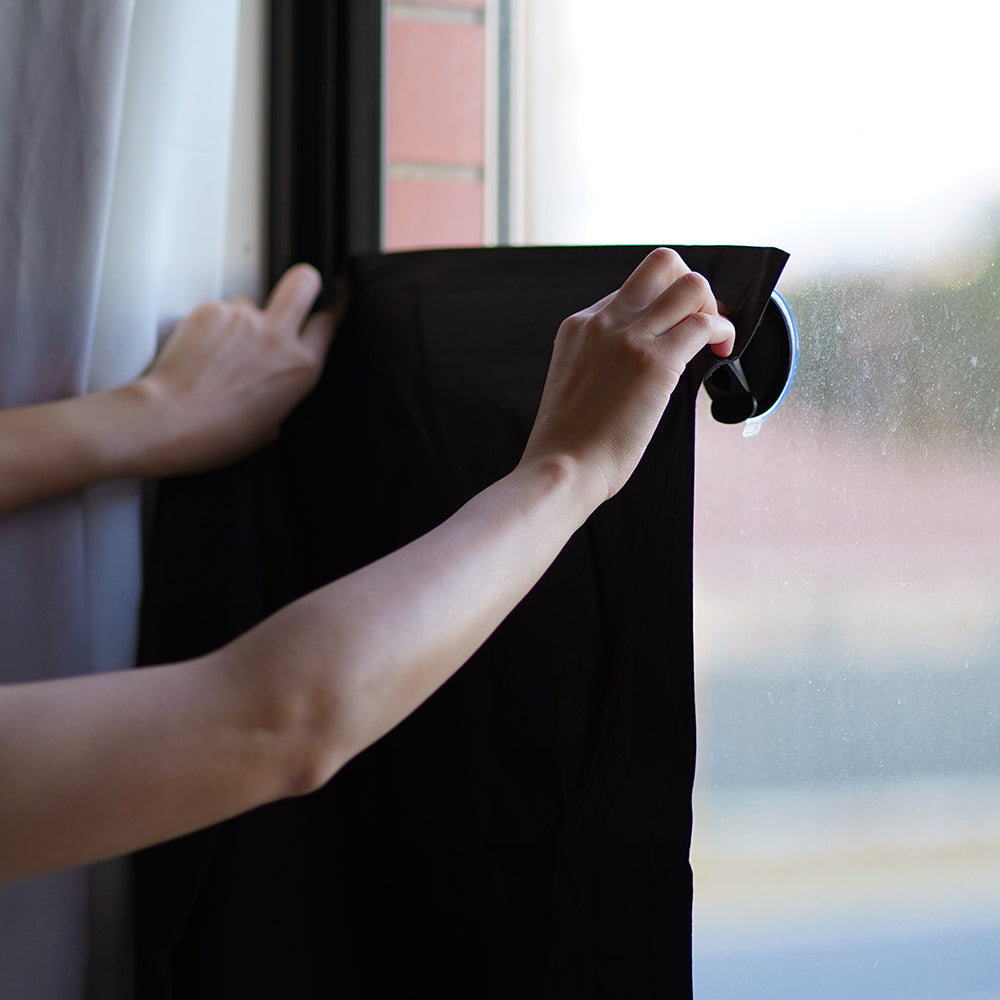
A portable blackout blind is one of the most flexible and effective options available. Designed to attach directly to your window using suction cups or velcro strips, a quality portable blind blocks 100% of light without any drilling or permanent installation. The blind packs flat when not in use, making it ideal for renters, travellers, parents of young children, and anyone who wants a reliable blackout solution without committing to permanent window dressings.
The My Blackout Portable Blind fits standard Australian windows up to 200 cm wide and installs in under two minutes with no tools required. It is OEKO-TEX certified, BPA-free, and ships free Australia-wide. It is also a popular choice for blackout blinds for baby rooms and blackout blinds for shift workers.
Blackout Curtains
Blackout curtains are an excellent solution for creating a dark room. They are available in a variety of colours and styles and can be hung on a curtain rod like regular curtains. They are also made with a special lining that blocks out all light.
Window Tinting
Window tinting can be applied directly to the glass of your windows and is effective at reducing glare and blocking UV rays. However, even the darkest legal tint still allows light through, making it better suited to dimming a room than achieving a true blackout. If complete darkness is the goal, tinting alone will not get you there.
Blackout Window Film
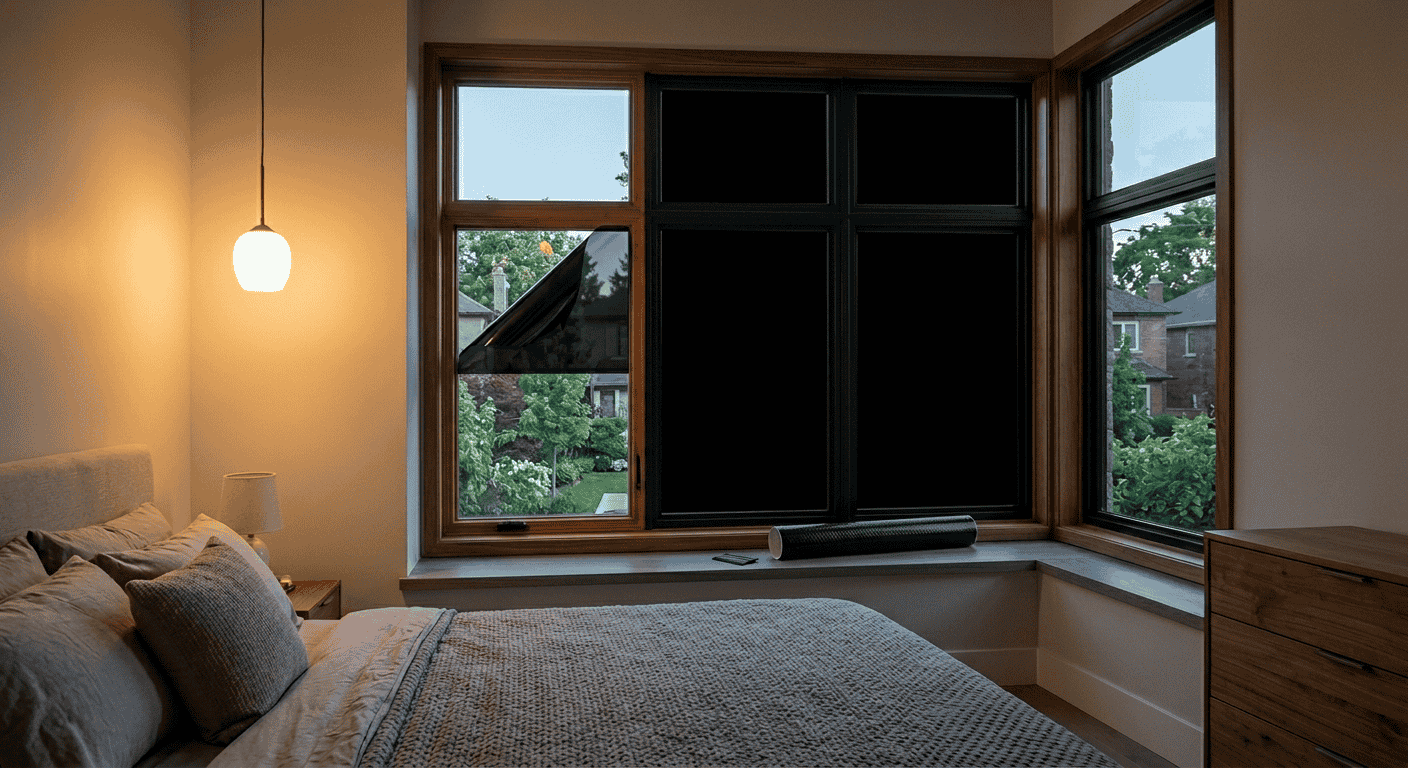
Blackout window film is a self-adhesive film applied directly to the glass. Unlike professional window tinting, blackout film is specifically designed to block light rather than just reduce it, and it is available as a DIY product at most hardware stores. It can get close to true blackout on the glass pane itself, though light still enters around the edges of the frame. It is also a semi-permanent solution: removal can leave residue or, in some cases, damage the glass surface, which makes it less suitable for renters.
Blackout Liners
Blackout liners are clip-on or hook-on panels that attach to existing curtain rods or rails, adding a light-blocking layer to curtains you already own. They are one of the more budget-friendly options and cause no damage to the window or walls. The trade-off is that they rely on the fit of your existing curtains: if your curtains do not reach the edges of the frame, light will still bleed in around the sides.
DIY Cardboard or Fabric Coverings
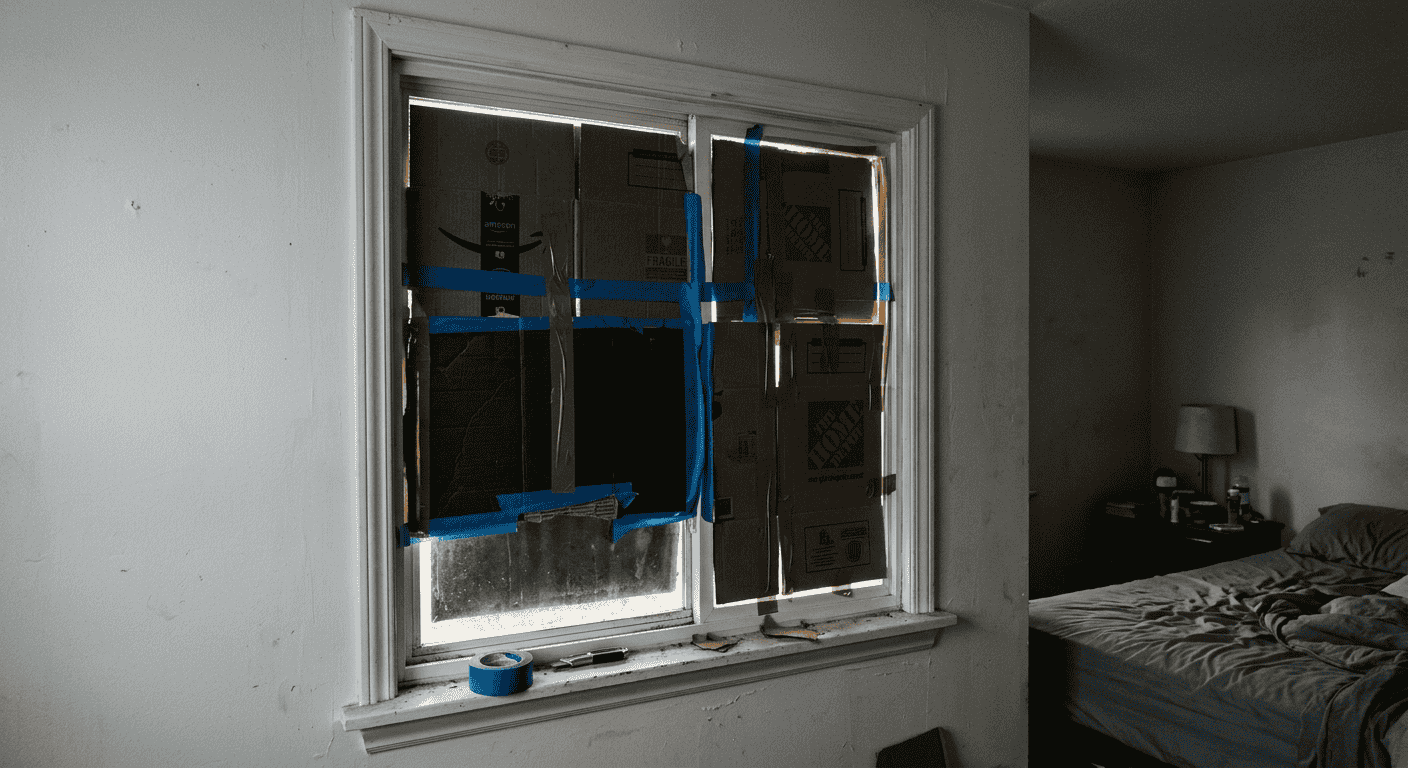
If you are on a budget, you can make your own blackout coverings using cardboard or fabric. Simply cut the material to fit your window and attach it with tape or velcro. This solution is temporary, but it can be effective and inexpensive.
Conclusion
Aluminium foil may seem like an easy and inexpensive solution for blocking light from your windows, but the trade-offs are significant. It degrades quickly, poses a fire risk in certain conditions, and does nothing for the look of your home.
The good news is that there are plenty of better options available, from blackout curtains and shades to portable blinds that fit any window without tools or permanent fixtures. Whichever route you choose, measure your windows first and pick a solution that matches both your needs and the style of your space.
"Great for working night shift and much more convenient than my previous solution of taping cardboard boxes to the window."
Better Sleep Starts Tonight
Ditch the DIY fixes. Free shipping Australia-wide. OEKO-TEX certified and BPA-free.
Check AvailabilityUse code WELCOME10 to get $10 off your first order.
Frequently Asked Questions
Aluminium foil can reduce light coming through a window, but it rarely delivers a complete blackout. It does not seal the edges of the window frame, so light leaks around the sides. Over time, the foil can also crinkle or tear, creating gaps. For a true blackout, a properly fitted blind or curtain with a light-blocking lining will perform significantly better.
In most parts of Australia, it is not illegal to cover your windows with aluminium foil. However, some body corporates and rental agreements prohibit window coverings that are visible from outside the building. It is worth checking your lease or strata rules before going ahead.
Yes, there is a genuine risk. Aluminium foil can concentrate sunlight onto nearby surfaces and generate significant heat build-up, especially on hot days. Placed close to light fittings, curtains, or other flammable materials, this creates a real fire risk. For a safer alternative, choose a purpose-designed blackout covering rated for everyday use.
If you need an immediate, low-cost solution, heavy fabric or cardboard pinned or taped over the window can work short-term. For a lasting result without a large upfront cost, a portable blackout blind is one of the most affordable purpose-built options, and it moves with you when you change address.